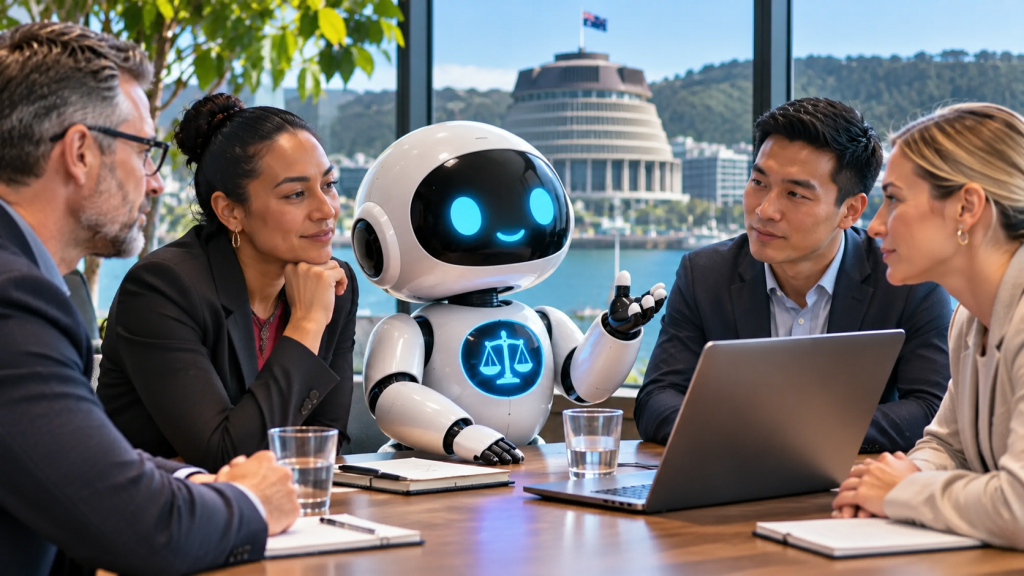
New Zealand’s Commerce Commission has released new guidance explaining how existing consumer protection and competition laws apply when businesses use artificial intelligence. The guidance addresses AI-powered customer interactions, advertising, pricing, automated decision-making and the growing use of autonomous AI agents.
The Commission is reminding businesses that using AI does not change their legal obligations under the Fair Trading Act or Commerce Act. Organisations remain accountable for misleading information, unfair commercial practices and anti-competitive behaviour, regardless of whether decisions are made by employees, algorithms or AI systems. The guidance also encourages boards and senior leaders to take greater responsibility for overseeing AI use.
Key facts
- The guidance addresses obligations under the Fair Trading Act 1986 and Commerce Act 1986.
- Businesses remain responsible for misleading or inaccurate information generated by AI chatbots, advertisements and other systems.
- AI-generated fake reviews, endorsements and exaggerated product claims may breach consumer protection laws.
- Automated pricing systems and AI agents can create competition risks, including algorithmic collusion.
- Boards are encouraged to understand where AI is used and ensure appropriate governance, monitoring and safeguards.
- The Commission is not introducing a separate AI regulatory regime but clarifying how existing laws apply.
Our take
This is an important development for AI governance in New Zealand. It reinforces that organisations cannot transfer legal accountability to an AI provider or automated system. As businesses introduce AI agents into customer service, marketing, pricing and operational decisions, they need to understand how those systems behave and whether their outputs comply with existing laws.
For New Zealand boards and senior leaders, the practical starting point is an inventory of AI systems, supported by clear accountability, appropriate human oversight and ongoing monitoring. Organisations should also review AI-generated customer communications, pricing decisions and marketing content to identify potential compliance risks before they affect customers or attract regulatory attention.

