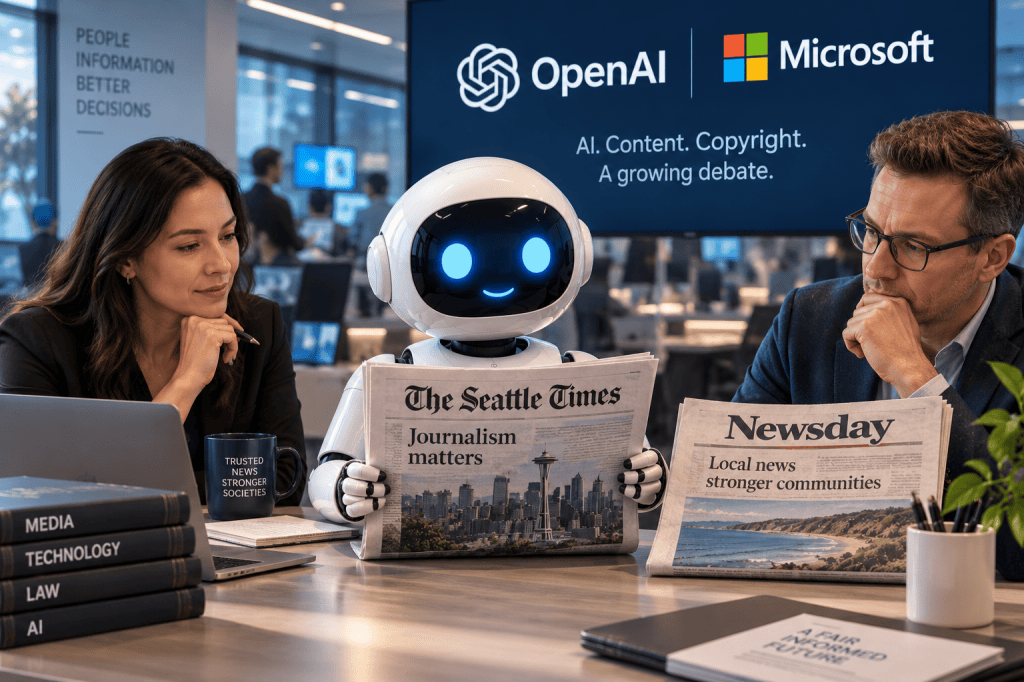
The Seattle Times and Newsday have filed a US federal lawsuit accusing OpenAI and Microsoft of using their journalism without permission to train and operate generative AI systems including ChatGPT and Copilot.
The publishers allege their content, including material behind paywalls, was scraped and incorporated into AI datasets. The case adds to the growing legal pressure around how copyrighted material is sourced and used to build generative AI services.
Key facts
- The lawsuit names OpenAI and Microsoft.
- It was filed in the US District Court for the Southern District of New York.
- The publishers allege both public and paywalled journalism was copied.
- Products identified include ChatGPT, Microsoft Copilot and Bing AI features.
- The publishers claim AI systems can reproduce or closely paraphrase their reporting.
- OpenAI maintains its training practices involving publicly available material are grounded in fair use.
Our take
Copyright and provenance remain significant issues for organisations adopting generative AI, particularly where AI-generated material is used commercially or externally.
For New Zealand organisations, the practical lesson is broader than AI model training. Businesses should understand where generated material comes from, establish review processes for externally published content, and be cautious about assuming an AI provider automatically carries every copyright risk associated with its outputs.
Sources

