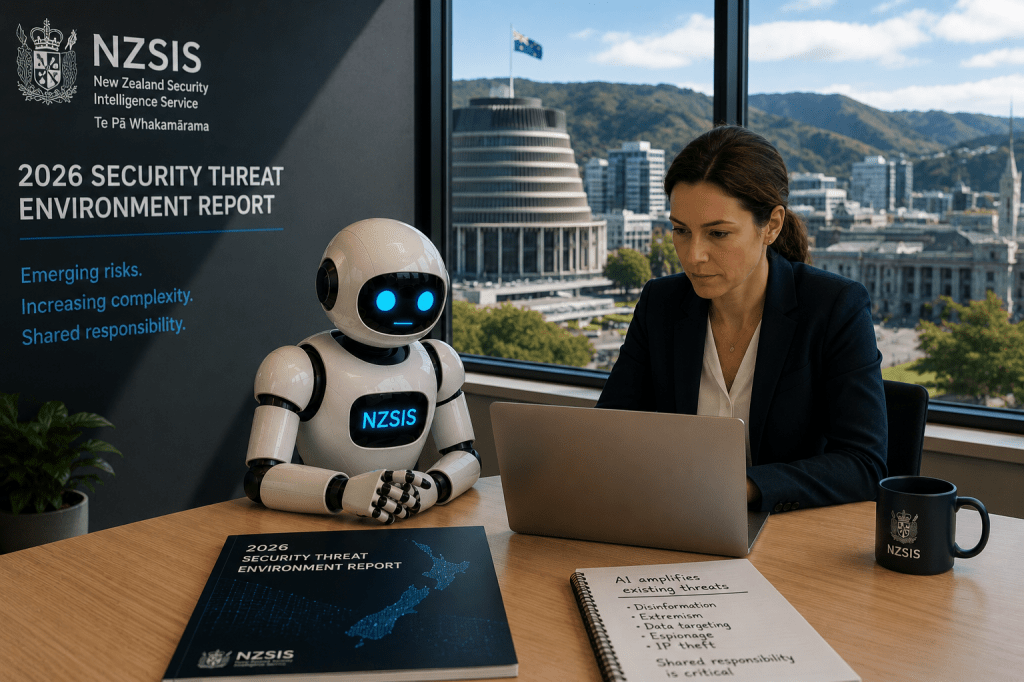
The New Zealand Security Intelligence Service has released its 2026 Security Threat Environment Report, identifying rapid advances in artificial intelligence, including generative AI, as one of the emerging issues affecting the country’s threat environment.
The report does not present AI as a standalone threat. Instead, NZSIS says AI can amplify existing risks, including online extremist material, influence activity and access to sensitive information, at a time when New Zealand organisations are already being targeted by foreign states and their proxies.
Key facts
- NZSIS identifies generative AI as an emerging area of national security concern.
- The agency says AI can intensify the spread and impact of extremist online material.
- New Zealand public and private sector organisations continue to be targeted for intellectual property, technology and non-public information.
- NZSIS stresses that national security risk management also involves organisations outside government.
Our take
The practical lesson is not that New Zealand organisations should avoid generative AI. It is that AI adoption needs to sit alongside existing security controls.
Organisations should pay particular attention to sensitive information being entered into AI tools, access granted to AI agents, identity and permission controls, and how convincing AI-generated content can affect staff. As AI becomes part of normal work, these controls need to become part of normal security practice too.

