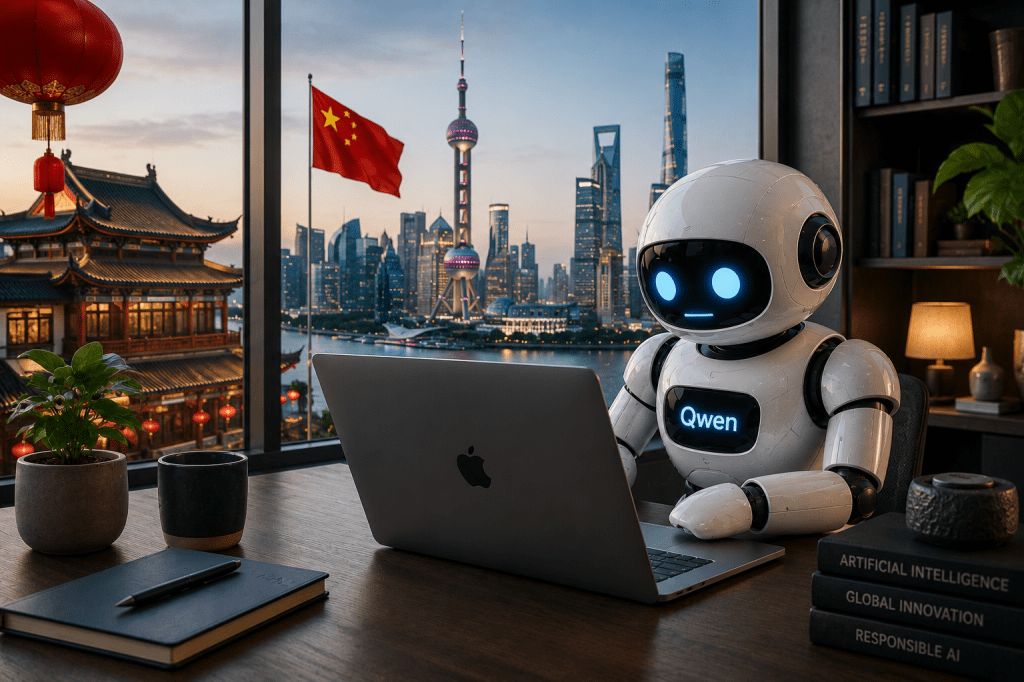
Apple has opened a new route for eligible Mac users in mainland China to use Alibaba’s Qwen generative AI through Siri and Apple’s Writing Tools. Users who opt in can call on Qwen for more detailed answers, analyse documents and photos, and generate text or images.
The development is significant because Apple is integrating an external generative AI provider directly into familiar operating-system tools rather than requiring users to move into a separate chatbot. It also shows how major technology companies are increasingly selecting different AI providers for different markets, based on regulation, availability and local requirements.
Key facts
- Qwen can be accessed through Siri and Writing Tools on eligible Macs running macOS 26.6 or later.
- The integration supports document and image analysis as well as text and image generation.
- Users must actively enable the Qwen extension and sign into a Qwen account.
- Apple says material passed through the integration cannot be used by Alibaba to train or improve its models.
Our take
The interesting part is not simply Apple choosing Qwen. It is the move towards AI becoming an embedded layer inside existing workplace software, with the underlying model potentially changing depending on geography or regulatory requirements.
For New Zealand organisations, this makes supplier governance more important. A familiar application may increasingly connect to different AI services behind the scenes. Organisations should understand which models process their information, where that processing occurs, what information is retained, and whether those arrangements change by region or software version.

