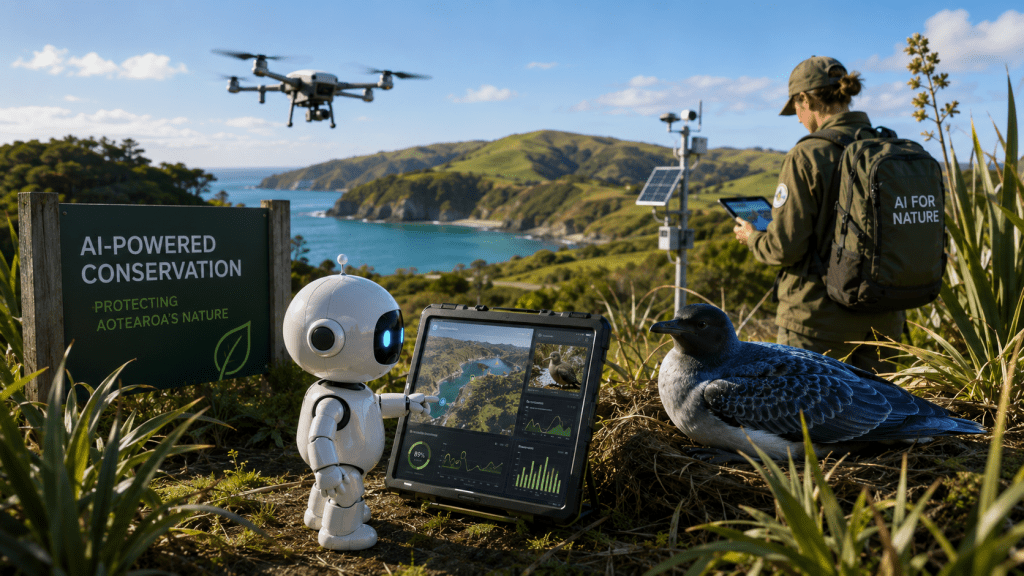
A New Zealand conservation organisation has been highlighted by Google as an example of how AI-enabled tools can reduce repetitive administrative work. The Tawaki Project, which studies Fiordland crested penguins, used digital tools to turn handwritten field records into structured, accessible information.
Google reports that the project reduced six weeks of manual data processing to just minutes by standardising and automating its data collection in Google Sheets. This gave the small, volunteer-supported organisation faster access to its research data and more time to focus on conservation, analysis and fundraising.
Key facts
- The Tawaki Project researches Fiordland crested penguins in New Zealand.
- Historical handwritten field records were converted into usable digital data.
- Six weeks of manual data processing were reduced to minutes.
- The resulting information was used to support the organisation’s research and funding work.
- Google is expanding AI training and coaching resources for eligible nonprofit organisations.
Our take
The practical lesson is that useful AI projects do not need to begin with complex systems or large budgets. Automating one clearly defined, time-consuming task can create immediate value for a small organisation.
For New Zealand charities and businesses, a sensible starting point is to identify repetitive information-processing work, test an appropriate tool and retain human review before using the approach more widely.

