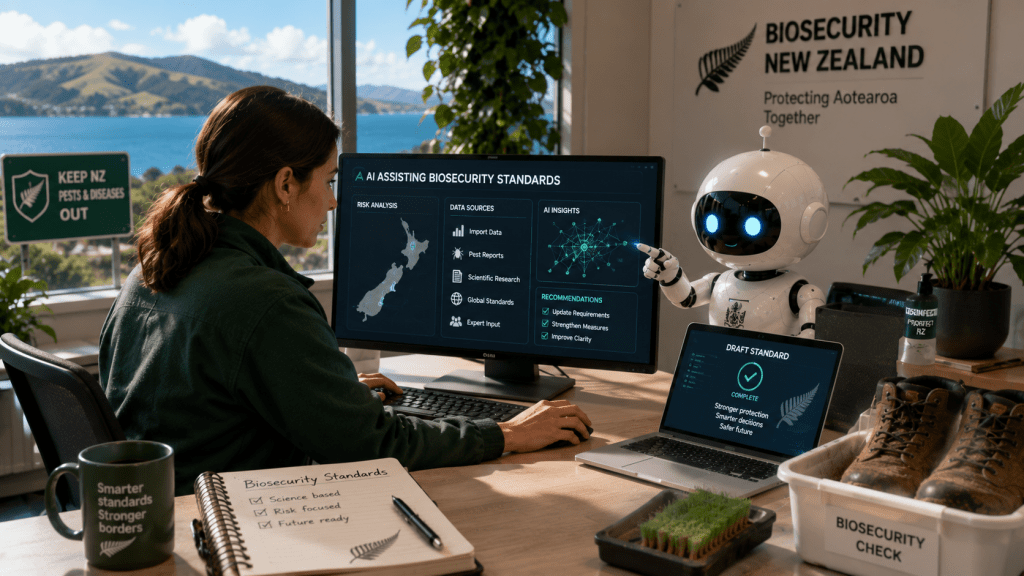
The New Zealand Government is testing a generative AI tool to help Biosecurity New Zealand develop import health standards. These standards set the requirements that plants, animals and other biological products must meet before entering the country. The four-month pilot will test whether generative AI can support document-heavy work and help Biosecurity New Zealand produce high-quality, evidence-based import health standards more safely and consistently. The aim is to make the process faster and more consistent while maintaining New Zealand’s existing biosecurity protections. Biosecurity specialists will continue to review the information, assess risks and make all important decisions. The AI tool is intended to support their work rather than replace expert judgement.
Key facts
- The pilot will run for four months.
- The AI tool will support document-heavy work involved in developing import health standards.
- Biosecurity experts will retain responsibility for final decisions.
- The project is intended to improve speed and consistency.
- Existing biosecurity protections will remain in place.
Our take
This is a sensible and controlled use of generative AI. It applies the technology to a clearly defined, document-heavy process while keeping qualified experts responsible for the final outcome. The approach provides a useful model for other organisations. AI can reduce administrative work and help prepare information, but important decisions should still be reviewed, verified and approved by an accountable person.
Source
New Zealand Government: New AI tool to help develop biosecurity standards

