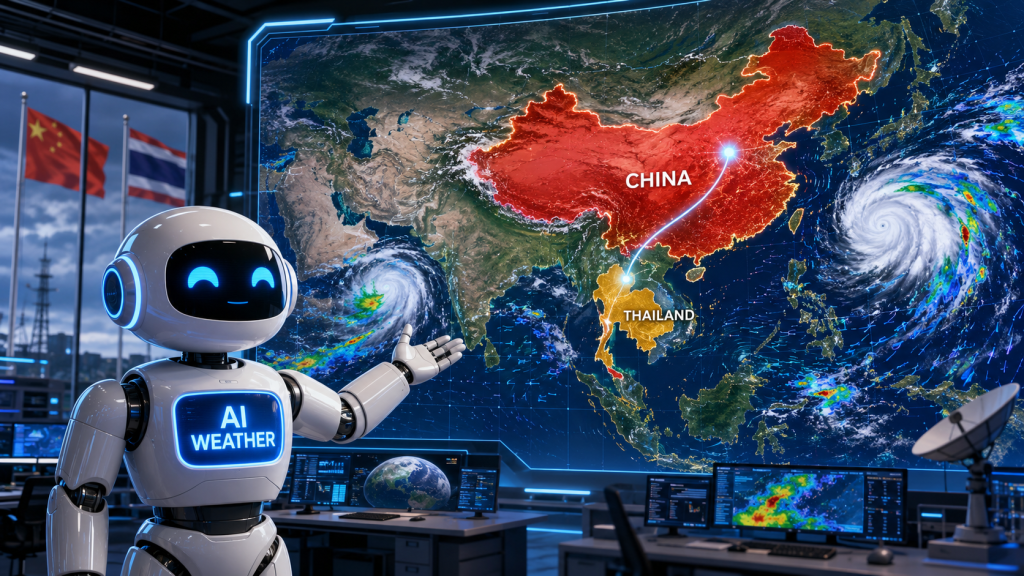
China and Thailand have launched a joint laboratory using artificial intelligence to improve the prediction and early warning of severe weather. The initiative will bring together specialists in meteorology, AI, agriculture, energy and infrastructure. The laboratory is intended to improve forecasting for events such as typhoons, heavy rainfall, drought and extreme heat. It may also support regional projects that rely on timely weather information, including agriculture, electricity networks and infrastructure planning.
Key facts
- The laboratory was launched on 17 July 2026 at the World Artificial Intelligence Conference Meteorological Forum.
- It is described as the first bilateral international laboratory dedicated to applying AI to meteorology.
- More than 40 experts from China and Thailand are expected to contribute.
- The work will build on China’s MAZU intelligent meteorological early-warning system.
Our take
This is a practical example of AI being used for a clear public benefit. Better forecasts and earlier warnings could give communities, emergency services and infrastructure operators more time to prepare for severe weather. The project also shows the value of countries sharing data and technical expertise. Weather events cross national borders, so effective forecasting increasingly depends on regional cooperation rather than individual systems operating in isolation.

