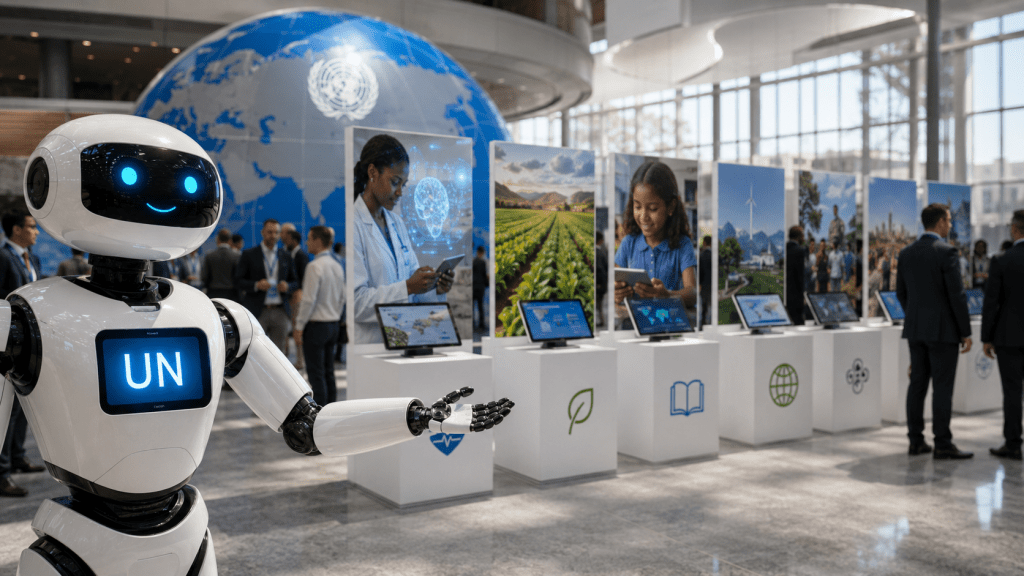
The International Telecommunication Union has recognised 59 projects using artificial intelligence to address practical challenges in areas including healthcare, education, agriculture, employment data and public infrastructure.
The projects were selected through the UN agency’s Innovate for Impact programme, which is designed to identify AI solutions that can be adapted and deployed in countries with limited technical resources.
Key facts
- The selected projects came from a global pool of nearly 400 entries.
- The programme reviewed 267 use cases from 40 countries and economies.
- Projects covered AI agents, generative AI, open-source systems and spatial computing.
- One Rwandan project uses AI to classify job descriptions in three languages.
- A Brunei project uses generative AI to improve access to chemistry education.
Our take
Some of the most useful AI developments are likely to come from smaller, focused systems built around a clearly defined problem.
The emphasis on open-source technology and deployment in lower-resource environments is particularly valuable. For these projects to create lasting benefits, they will still need reliable data, local expertise and a practical plan for maintaining the technology after the initial trial.

